SkyCool: Metamaterials as Climate Tech
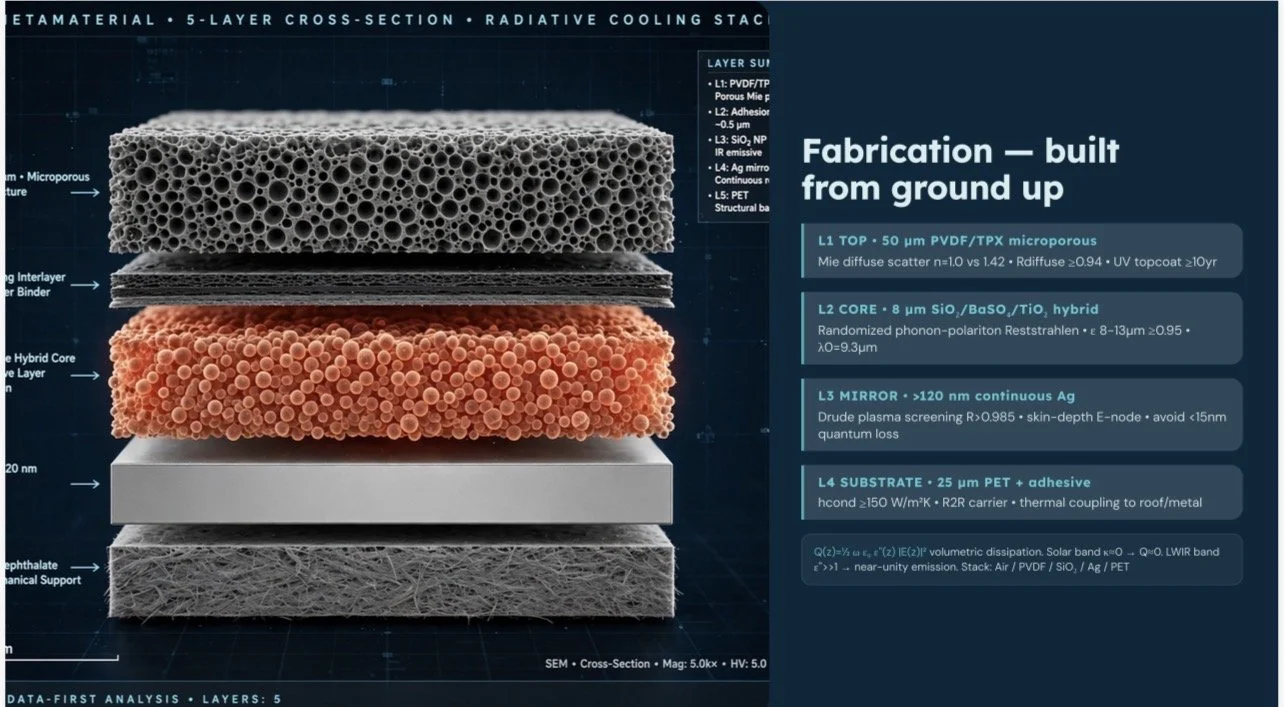
SkyCool Metamaterial is a passive, low-cost radiative cooling technology designed to reduce surface temperatures under direct sunlight without electricity. It utilizes a 5-layer engineered film that effectively cools surfaces below ambient temperature by leveraging the 3K cold sink of outer space.
How It Works
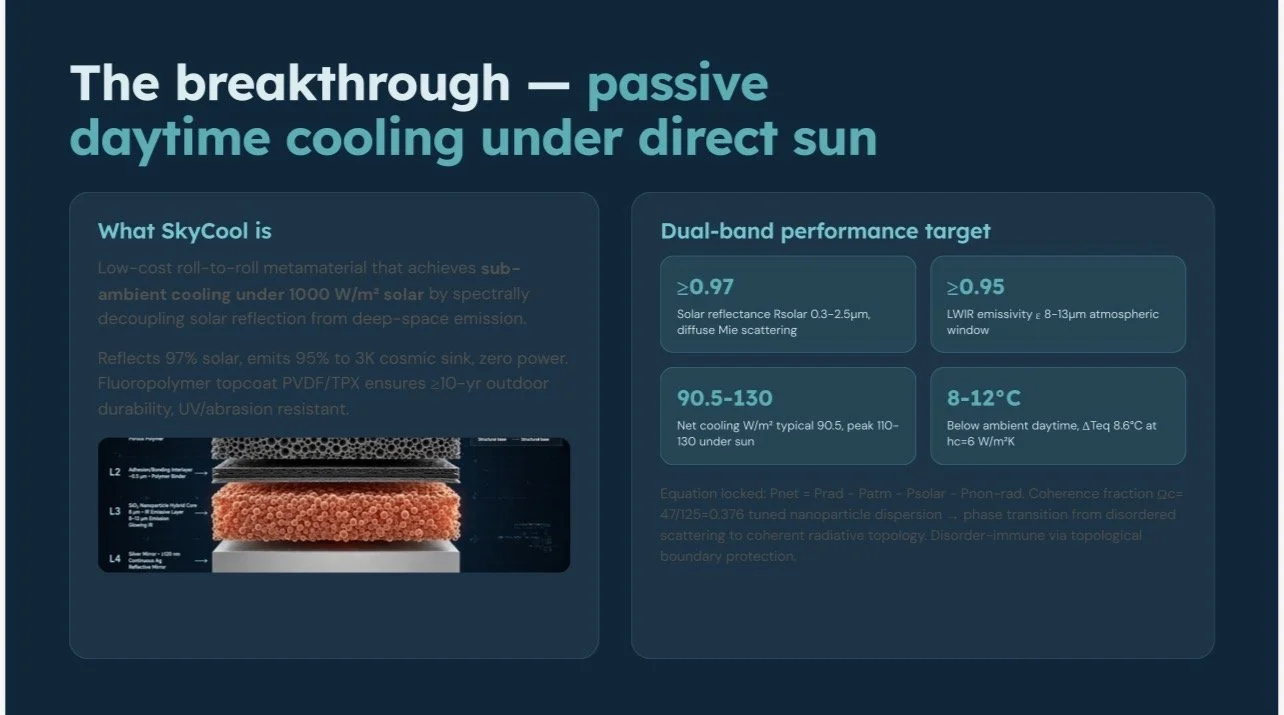
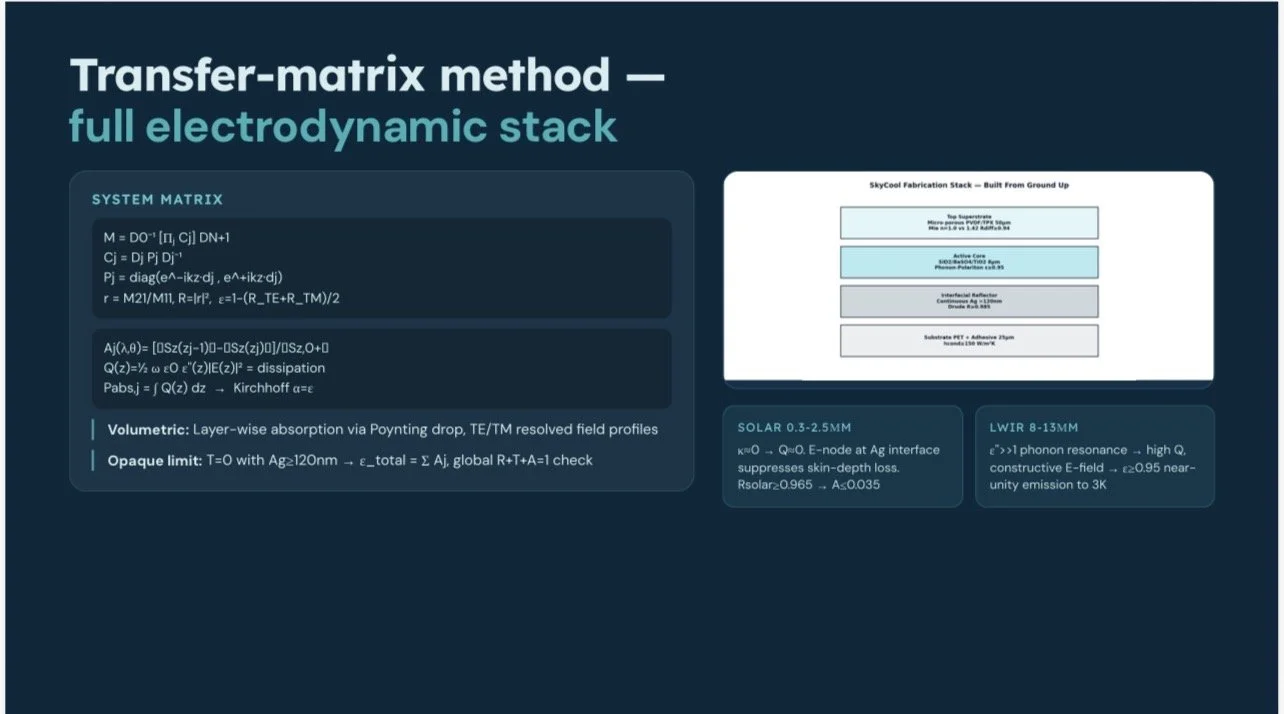
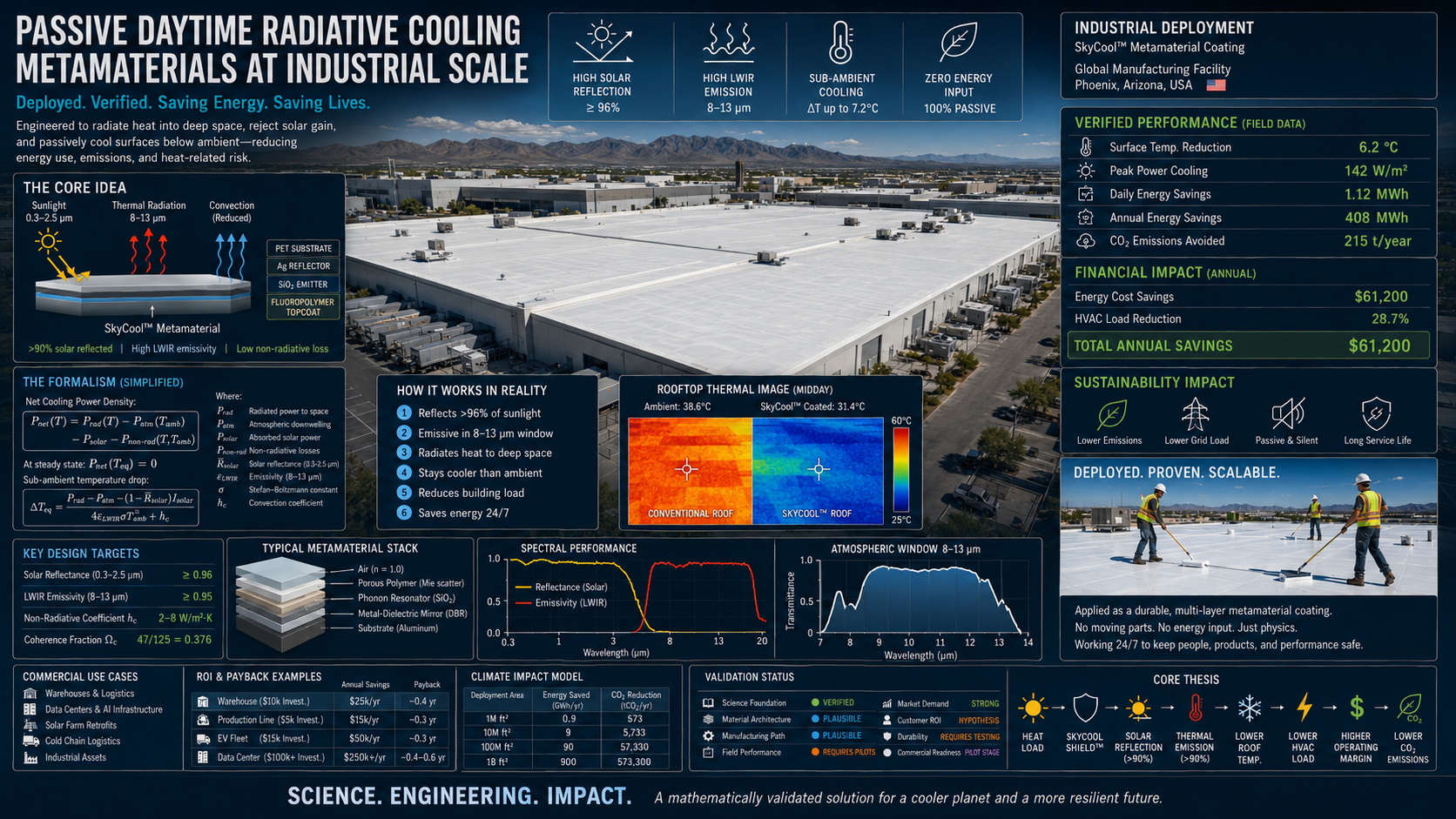
• Spectral Decoupling: The material reflects over 97% of solar energy (0.3–2.5µm) while simultaneously emitting thermal radiation within the 8–13µm atmospheric window.
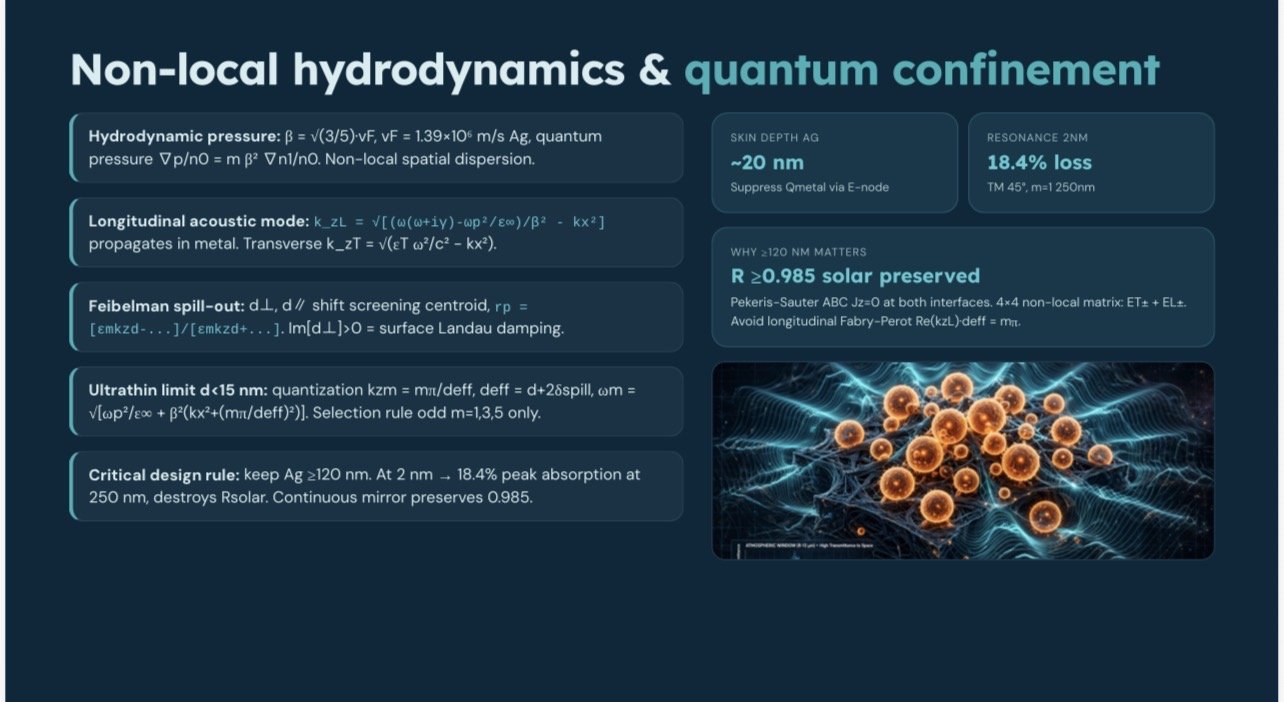
• Stack Composition: It consists of five layers: a microporous PVDF/TPX top layer, an adhesion/bonding interlayer, an SiO₂ nanoparticle hybrid core, a silver mirror, and a PET structural substrate.
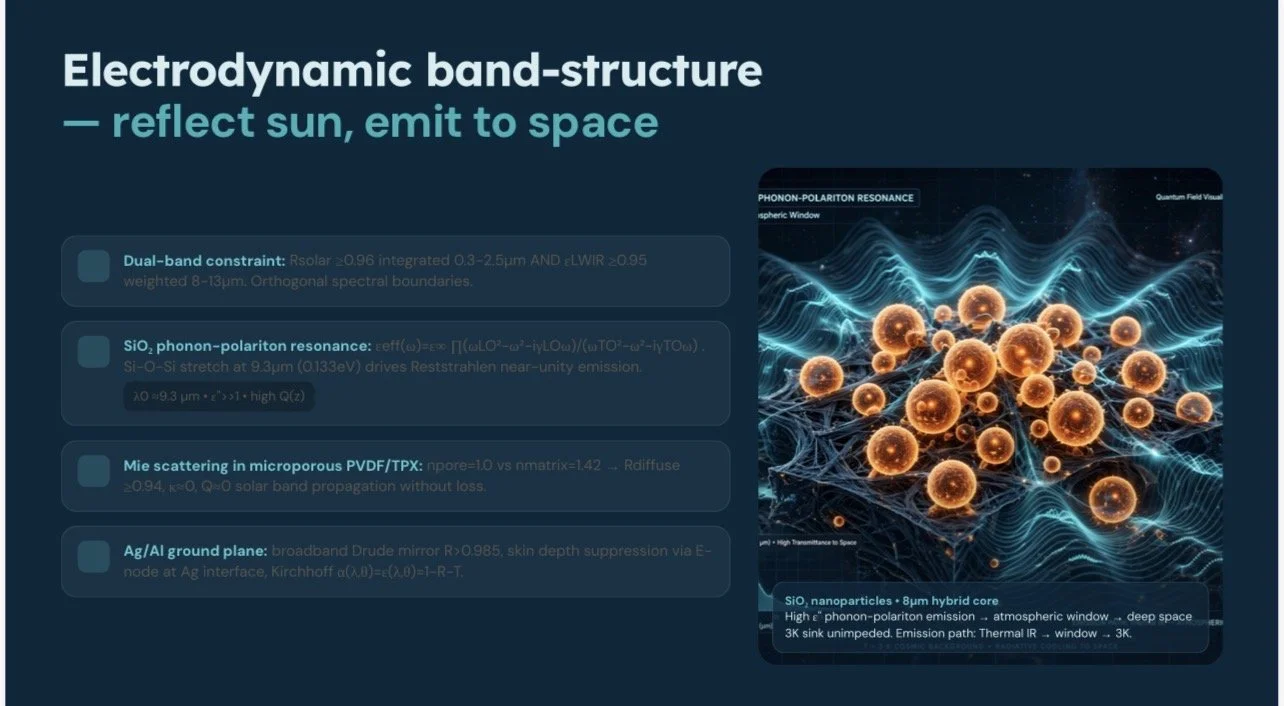
• Physics: Cooling is driven by phonon-polariton resonance within the SiO₂ nanoparticles and Mie scattering within the top porous polymer layer.
Performance and Durability
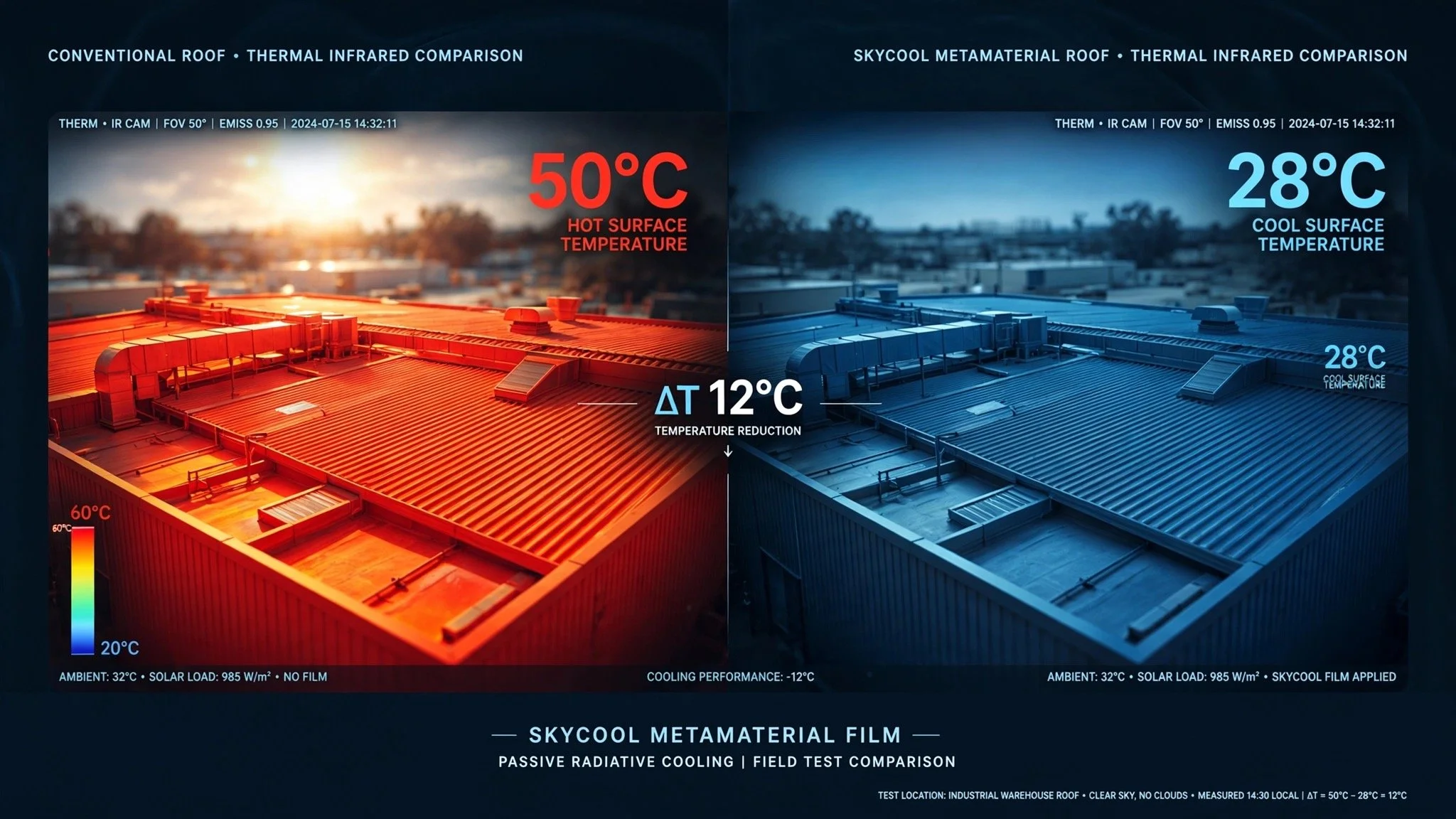
• Cooling Metrics: The material achieves a net cooling power of 90.5–130 W/m² and maintains surface temperatures approximately 8.6°C below ambient under clear sky conditions.
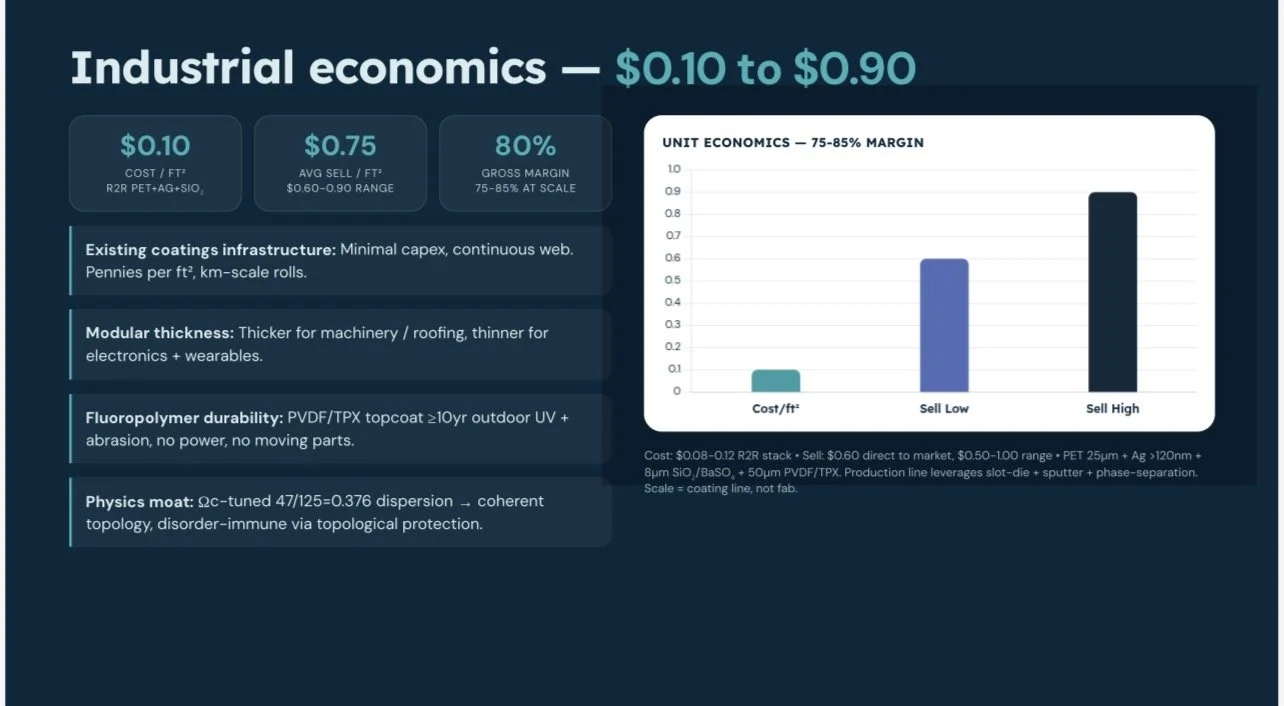
• Durability: The fluoropolymer topcoat provides resistance against UV radiation and abrasion, ensuring an operational lifespan of 10+ years.
Economics and Applications
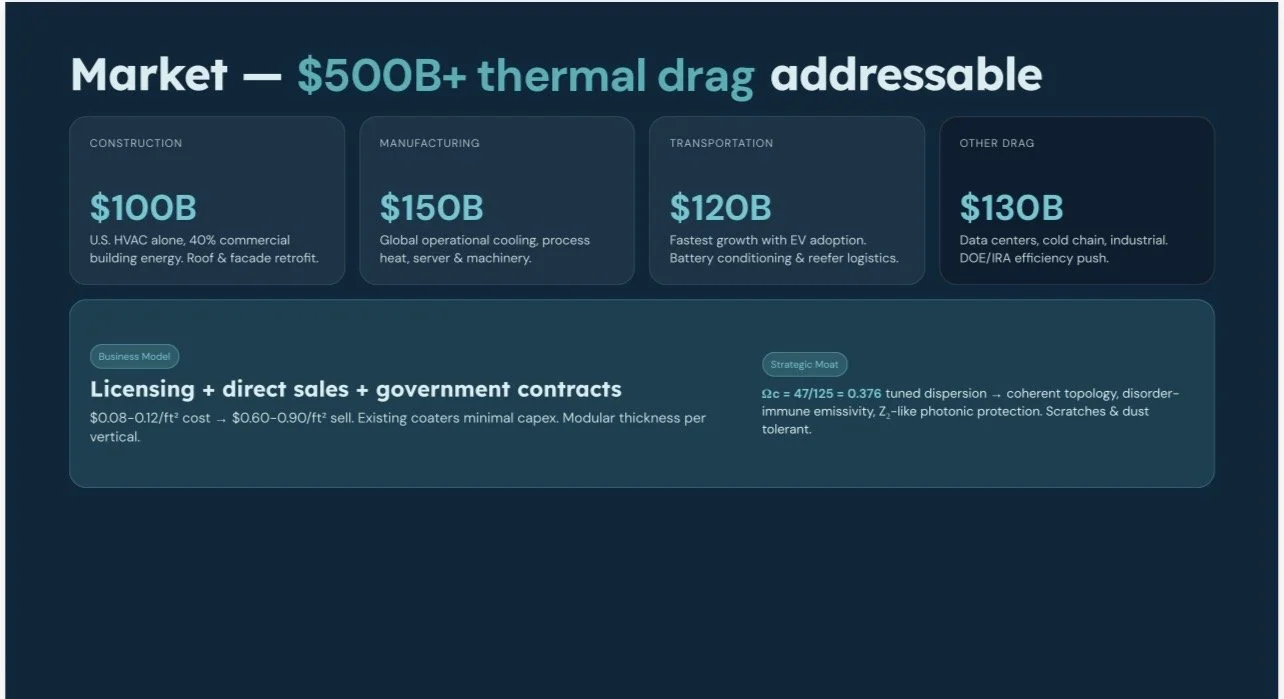
• Manufacturing: The material is produced using low-cost, continuous roll-to-roll (R2R) processes, costing approximately $0.10 per square foot.
• Primary Applications:
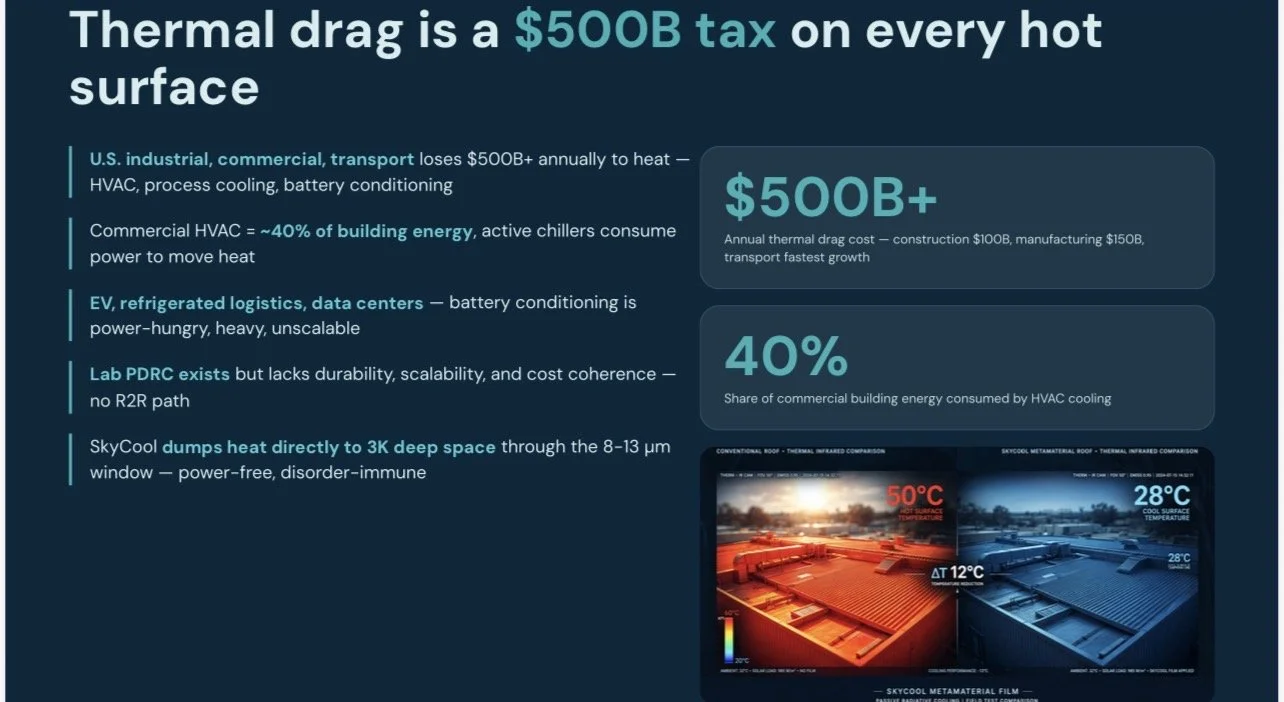
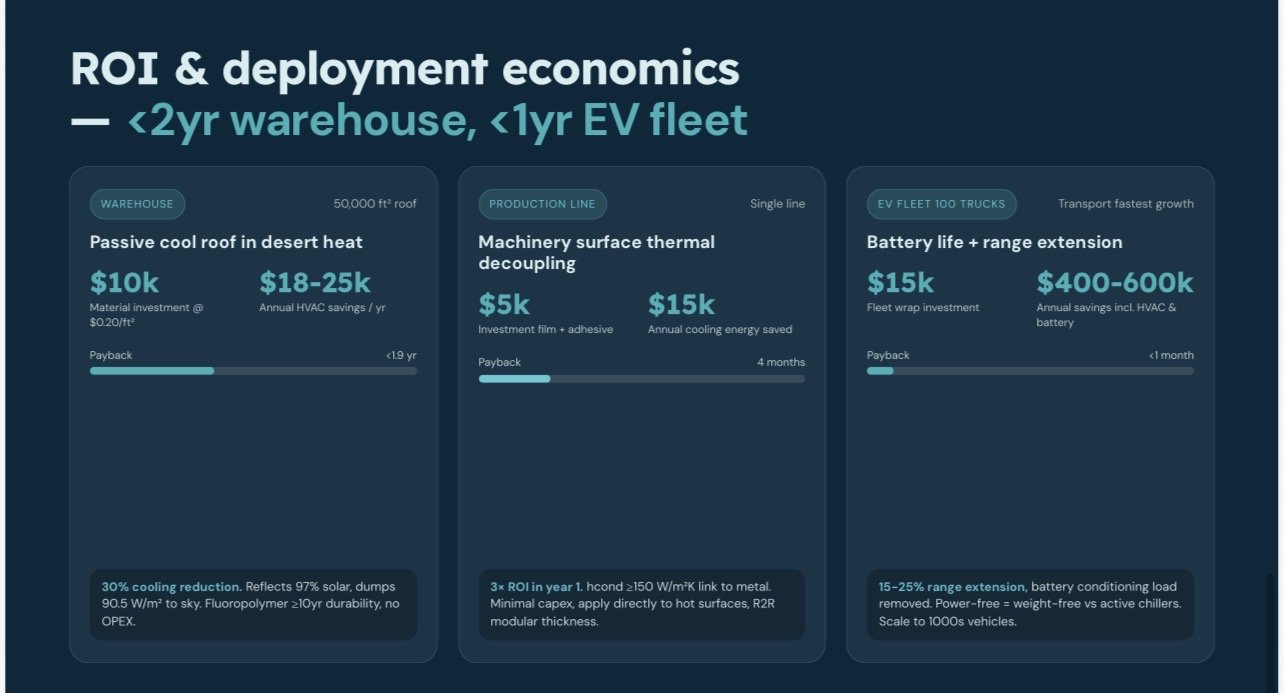
◦ Construction: Rooftop applications reduce HVAC loads by nearly 29%, offering a payback period of under two years.
◦ Transportation: Implementation in EV fleets for battery conditioning can provide a 15–25% range extension, with a payback period of less than one month.
◦ Manufacturing: Applied for machinery thermal decoupling to improve operational cooling efficiency.